
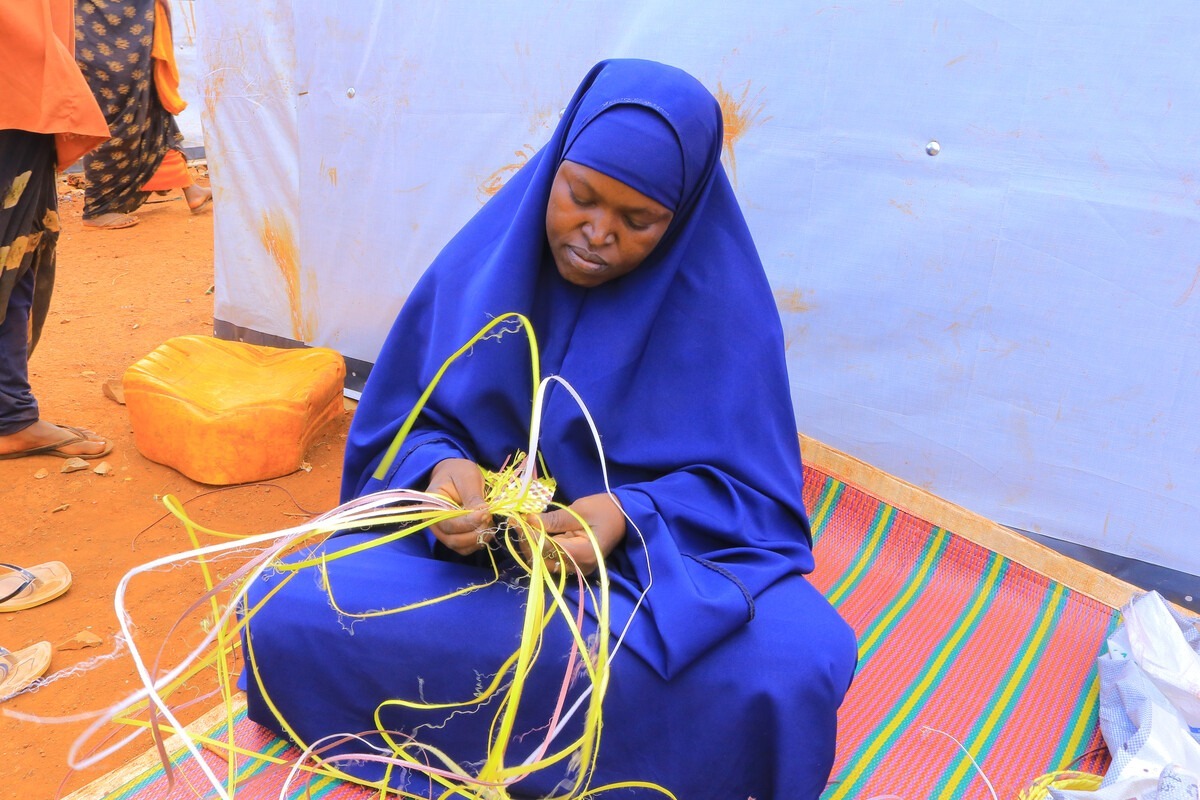
After displacement, daily life in camps across Somalia brings new challenges for women and girls. Limited movement, safety concerns and scarce resources can make it harder to meet basic needs or earn an income. Yet women in the camps supported through our work in Somalia, have shown creativity and leadership, transforming everyday waste into something practical, valuable and income-generating.
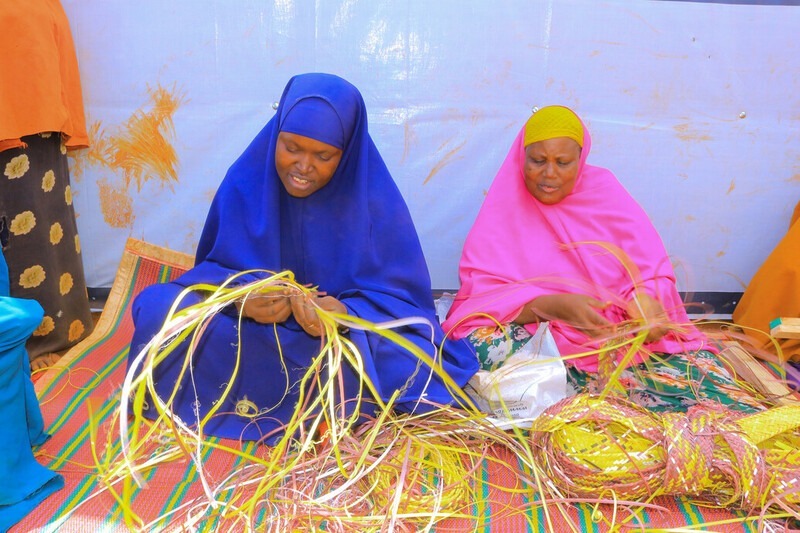
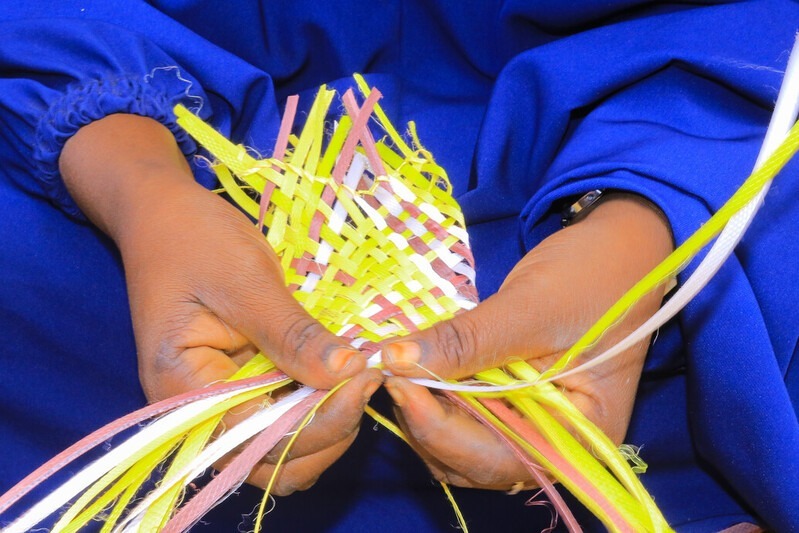
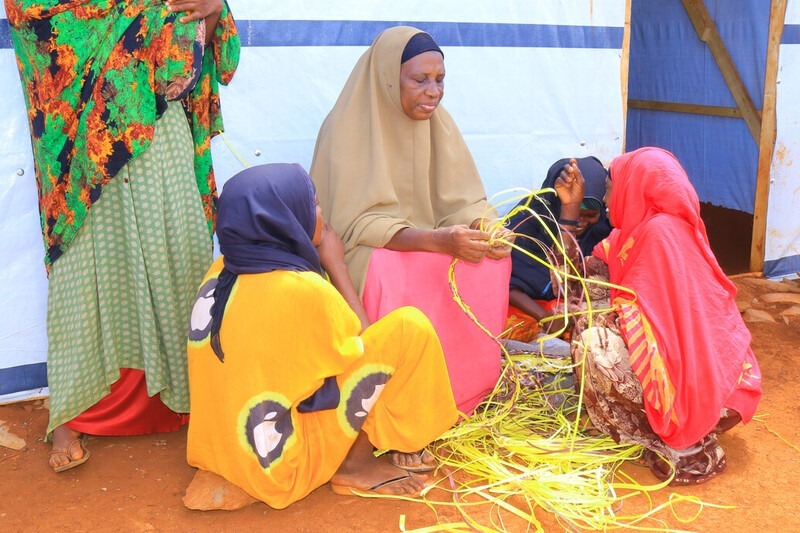
Women have begun reusing discarded tarpaulin packaging, strapping from aid supplies and plastic bags to make mats, baskets, vases and handbags. What started as a simple solution to a practical problem has grown into a small but meaningful source of income for families, while also helping to reduce waste and improve cleanliness in the camp.
While repurposing aid materials has offered short-term solutions, it’s largely a reflection of necessity, not choice. Re-using these items have helped meet immediate needs and provide income, but they are far from ideal, especially when it comes to shelter, safety, and long-term well-being.
Finding solutions close to home
Halima, a mother of four, explains how the idea first took shape. She wanted to make a mat to cover the entrance to a makeshift pit latrine, but could not leave the camp to collect traditional plant fibres because she feared for her safety.
Instead, she used materials that were already available around her – old plastic bags and pieces of tarpaulin cut into strips and woven together. Her solution was simple, but effective.
Working together to build livelihoods
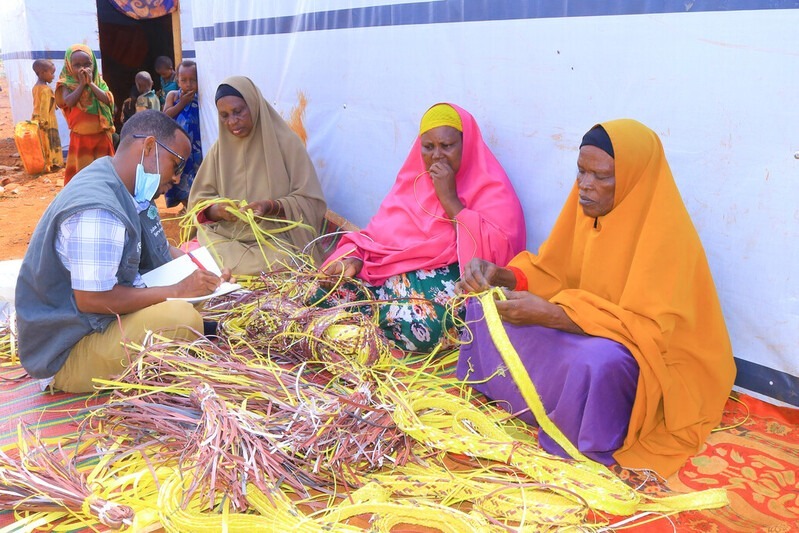
From experiences like Halima’s, women in the camp began to organise. Groups and associations formed so they could work together, sharing skills and selling their woven mats and baskets. For many, this collaboration has strengthened both livelihoods and community connections.
Fadumo, a member of one of the women’s groups, says the income has made a tangible difference to her family. “I am very happy to get some income. I can buy books and shoes for my children because of this project we have started from plastic and tarpaulin wastes,” she says.
Strengthening families and communities
Through selling the items they make, families are able to buy vegetables, meat and clothing – items that are rarely included in camp rations. Fadumo adds, quietly but proudly, that her work has changed how she is seen within the camp.
By contributing to her household and working with other women, she has become a respected and recognised member of the community.
Women at the heart of recovery
This work highlights both the challenges women face after disaster and the vital role they play in recovery.
Along with our partner Juba Foundation, we’re supporting tens of thousands of vulnerable people in Somalia who have been affected by disasters and conflicts. We are providing emergency shelters, and help people build durable homes that withstand extreme weather conditions.
Together, we can protect and empower the most vulnerable as they navigate life on the frontlines of crisis.
Become a regular giver